
Originally published May 16, 2023. Updated September 2026 with a summary, next steps and answers to common questions.
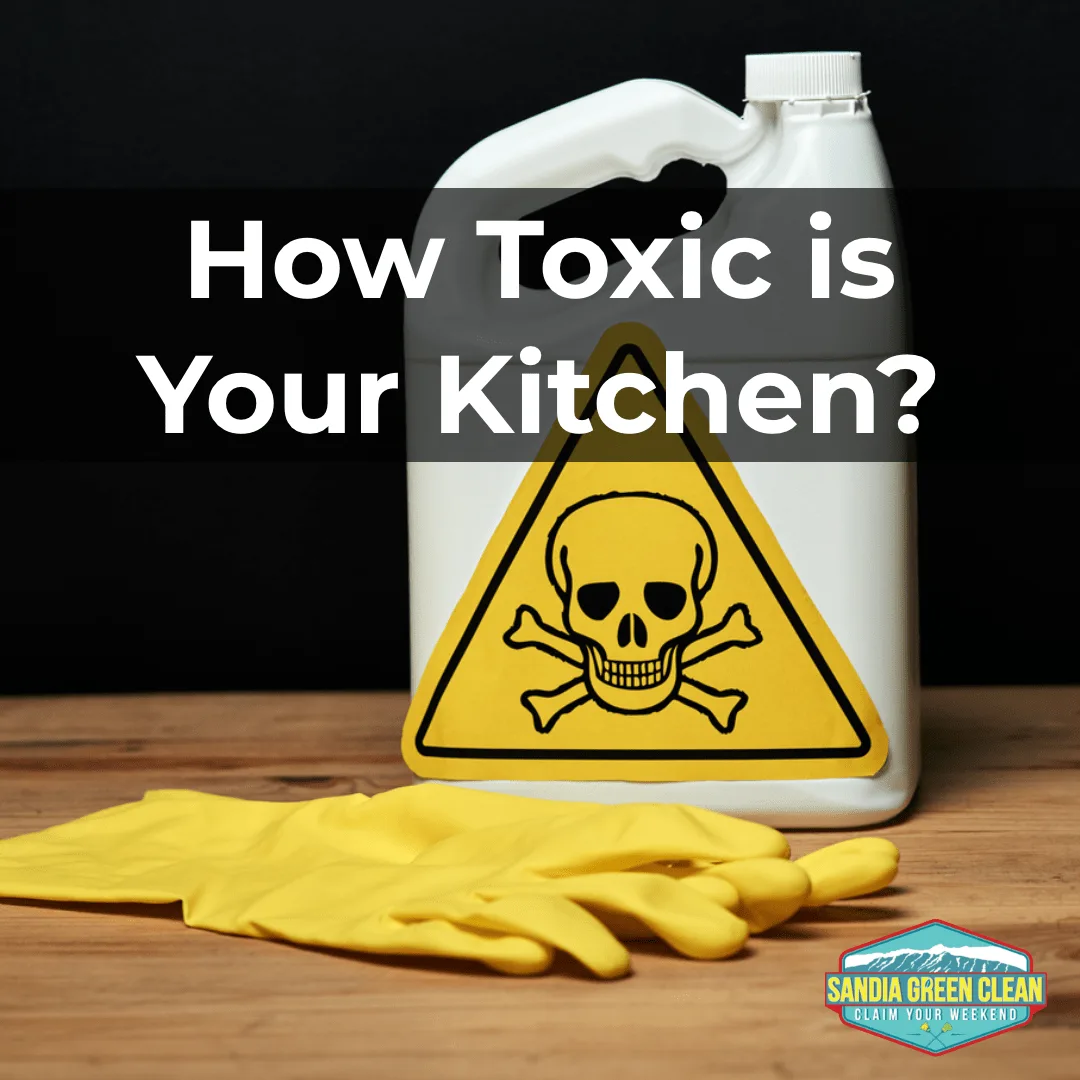
Humans are creatures of habit, which is why knowing we should do something and actually doing something are two very different things. Take your household cleaners, for example. So many of us have heard how harmful some of these products can be, we’ve probably read more than one article or blog post citing the dangers or potential side effects of these products, but we haven’t actually taken the time to replace what we’re using in our homes.
Why?
Because it requires time, energy, and some research.
And when we’re in a pinch, we’re just going to reach for what we have on hand to get things done.
If any of this sounds familiar, the good news is that today can be the day you finally toss toxic products in the trash.
These products are the ones that contain or are likely to contain:
- Carcinogens
- Endocrine Disruptors
- Neurotoxins
Let’s start there…
Here are the 6 most common toxic products in your home and kitchen (and the ones you should be tossing right now)…
1. Air fresheners. According to the Environmental Working Group, more than half of the products in your home that are meant to “freshen” things up contain ingredients that can damage your lungs. And nearly a quarter of those products have been shown to even cause asthma.
2. Artificial fragrances. The word “fragrance” is a clever way for companies to hide what they’re really putting into products. Because they can be considered “trade secrets” they don’t have to disclose what’s inside many of the household cleaners you use on a regular basis.
3. Antibacterial products. Cleaning your kitchen doesn’t have to destroy every living thing in order to make it a safe place for your food and family. By using natural products instead of harsh chemicals, you can keep your family and food healthier while reducing the chances of developing drug-resistant superbugs.
4. Harsh drain and oven cleaners. Absolutely one of the most dangerous products in your home, these two should be tossed ASAP. There are so many ways to effectively clean your drains and ovens without the need for “professional” grade chemicals.
5. Products with bleach and ammonia. Both of these products are harmful for the lungs and really have no business in your home. Again, there are plenty of natural products that can get the job done without putting you and your family at risk.
6. Sud-making products. We typically associate cleanliness with the amount of suds a product produces (thanks commercials!) But in reality the sud-making ingredients are typically pretty dangerous for your health. Some of the ingredients that make suds (including DEA, TEA, 4-dioxane, sodium laurel sulfates, and PEGs) have been officially documented as carcinogens and are known to make your organs toxic.
If you’re not sure whether or not some of your favorite kitchen products are harmful for your home and family, check out this list of some of the most well-known toxic ingredients. If a product you love contains any of these, seriously consider tossing it and finding a replacement. (The good news is that there are plenty of natural alternatives that are totally safe and effective — baking soda, vinegar, and essential oils can do almost anything!)
You’ll notice that the list contains several different names for each harmful ingredient because companies try to be sneaky with how they list them on their labels!
The 14 Most Toxic Ingredients In Your Kitchen Products
1. 2-Butoxyethanol, 2-BE, Ethylene Glycol, Butyl Cellosolve: Typically in degreasers and oven cleaners
2. Coal Tar Dyes, P-Phenylenediamine, Naphtha, Star, Benzin B70: Often found in soap and products boasting “all-purpose”
3. MEA, Monoethanalomine, DEA, Diethanolamine, TEA, Triethanolamine: You’ll see these ingredients in dish soaps, all-purpose cleaners, surface cleaners, and oven cleaners
4. Nonylphenol Ethoxylates, NPE, NP, Nonylphenol: Another common ingredient found in all-purpose cleaners, degreasers, and air fresheners
5. Fragrance, Parfum, Perfume, Phthalate, DEP, DEHP, DBP: These are in nearly everything!
6. Phosphates, Sodium Tripolyphosphate: Most likely in your dishwasher detergent
7. Sodium Laurel Sulfate, SLS, SLES, Sodium Laureth Sulfate: You’ll spot these in dish soaps and liquid detergents
8. Sodium Hydroxide, Lye, Caustic Soda: Mostly used in disinfectants, drain cleaners, and oven cleaners
9. Sodium Dichloroisocyanurate Dihydrate, Sodium Chloride: Found in disinfectants, odor removers, and surface cleaners
10. TSC, Triclosan, TCC, Triclocarban: Almost always in disinfectants, dish soaps and hand sanitizers
11. Ammonia: Spot this toxin in all-purpose cleaners, stainless-steel cleaners, oven cleaners, and drain cleaners
12. Silica Powder, Sodium Silicate: This is found in abrasive cleaning powders
13. Trisodium Nitrilotriacetate, NTA, EDTA: Sometimes in surface cleaners
14. Quaternary Ammonium Compounds, Quats, Benzalkonium chloride, Benzethonium chloride, Alkyl dimethyl benzyl ammonium chlorides (C12-16), Alkyl dimethyl benzyl ammonium chloride (C14 60%, C16 30%, C12 5%, C18 5%), Alkyl dimethyl ethylbenzyl ammonium chloride (C12-14), Alkyl dimethyl ethylbenzyl ammonium chlorides (C12-18), Didecyldimethylammonium chloride and Dioctyldimethylammonium chloride: Spot these in liquid detergents, stain removers, degreasers, air freshening products, and all-purpose cleaners (Also, are you kidding us with this list of possible names!?)
If you’re interested in learning more about the possible side effects of using products with these ingredients, a simple internet search will start to turn up a lot of research. Not only are some of these ingredients banned in other countries, several have been proven to be carcinogenic.
Ready to finally make healthier swaps?
If you want a full refresh for your kitchen, consider our families’ favorite all-natural, eco-friendly products from Young Living. Not only is the Thieves blend super effective, but it smells amazing thanks to its clove, lemon, cinnamon, and eucalyptus essential oils. We always get compliments in our homes when we use it!
Click here to learn more about Thieves from Young Living.
Some more good news?
Our cleaning crews only use non-toxic, eco-friendly products in your home when we come to clean! Get on our schedule today by clicking here.